Technology is changing fast, and today, most of us expect everything to work instantly. A fitness tracker showing your heart rate or a traffic light adjusting to busy roads are great examples of how today’s tech users demand immediate results.
But do you know how it is possible? It is all because of edge computing that helps devices think and act quickly. It has changed the way data is processed and delivered.
Earlier, the data collected was sent to a faraway server, and the data processed there used to take a lot of time, and if your internet connection is not working well, then you can expect it to take more time to provide a response. However, that is not the case today as edge computing has changed all that.
Instead of sending information to a distant server, it is processed right where it is collected, whether it's a sensor, device, or local system. This means faster results and less delay. This also offers startups an advantage in how they operate and deliver services.
Edge computing is not just for established and famous tech companies anymore. More and more UK startups are using it to grow their business. They are using this amazing technology to make things quicker and safer.
In this article, we will look at how UK startups are using edge computing, what benefits it brings, and what challenges they face. Let’s get started.
What Is Edge Computing?
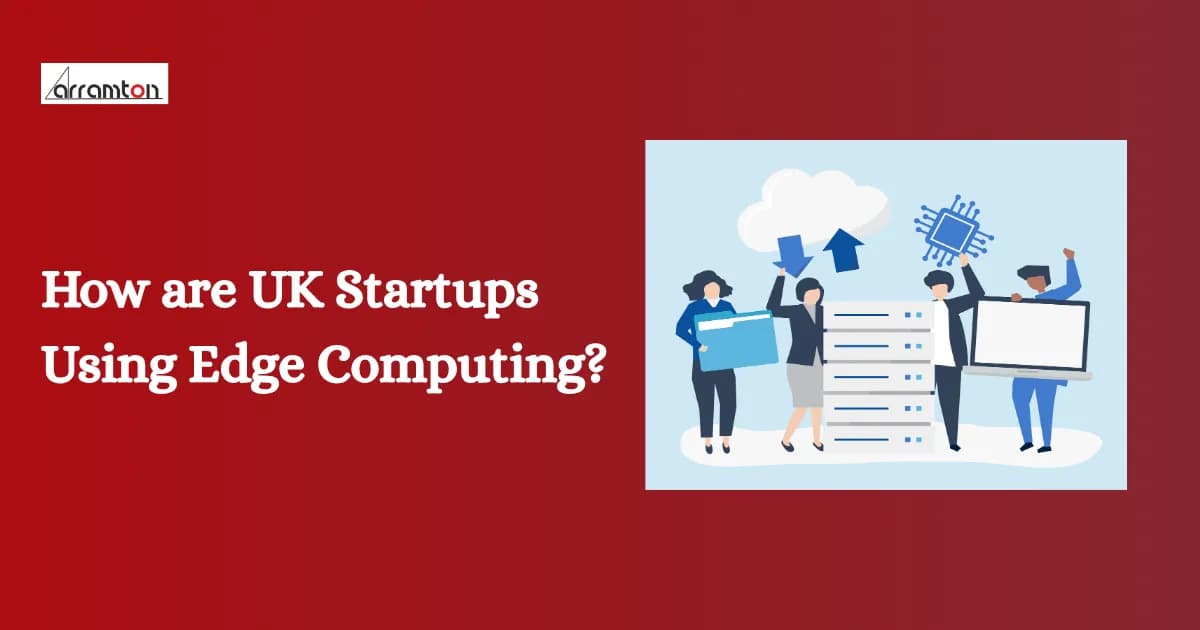
Edge computing is a way of processing data closer to where it is created. It is not sent all the way to distant cloud servers, which makes the complete process quick. It means data is managed on various local devices like sensors, routers, or a small server right at the “edge” of the network.

For example, imagine a smart traffic camera. With edge computing, it is not necessary to send all the footage to a central server to check for accidents.
The camera itself can detect problems instantly and send alerts. Edge computing is helpful when there are devices and systems that need faster responses.
In edge computing, constant access to the cloud isn't required, making it good for areas with poor internet connections too. Thus, it helps businesses and devices work more smartly and quickly by keeping data processing local and quite efficient.
How Does It Differ from Cloud Computing?
Edge computing and cloud computing have the same function, which is to process and manage data. However, they work in very different ways.
In cloud computing, the data it processes is collected from a device and sent to the internet on a central data centre, which is located far away. After it is processed, the results are sent back to the device. Cloud computing is beneficial for many tasks, like:
- Storing files
- Running large programs
- Analysing data in bulk

However, cloud computing can sometimes cause various problems. These issues usually include delays, especially when quick decisions are required. This is where edge computing is different.
It doesn’t send data to the cloud; instead, it processes the data right where it is created, which can be on the device or a nearby cloud server. This local processing means everything will happen:
- Faster
- With fewer delays
- Without relying too much on the internet speed
Here is a simple comparison:
- Cloud computing: For example, sending your clothes to a laundry service across town. They do a good job, but it takes time.
- Edge computing: For example, having your washing machine at home makes the laundry process quicker and more convenient.
Below is a detailed comparison and relationship between edge computing and cloud computing for your better understanding.

Key Applications of Edge Computing in UK Startups
Edge computing is opening new doors for UK startups. That is because it helps them build smarter, faster, and more reliable systems. Here is how startups in different industries are using it to solve actual problems that they face based on their industry.
1. Smart Cities and Urban Technology
New startup businesses in the UK that work with smart city projects use edge computing. This helps them improve daily life in many towns and cities.
There are many devices, such as traffic sensors, street lights, and air quality monitors, that collect data and respond almost instantly. Let's take an example of traffic lights. It can change based on the flow of the traffic, which can, in turn, help reduce traffic jams.
Edge computing makes it possible and doesn't even need to send data to a server that is far away, which helps save time and accuracy of the system.
2. Healthcare and Medical Devices
Another area where edge computing is mostly applied is healthcare. Healthcare startups in the UK use it to process patient data from wearable devices, like heart monitors and glucose sensors, directly on the device.
This implies that the alerts can be sent almost instantly if there is any change in the condition of the patient. It also allows doctors to monitor the patients remotely. This helps them give quick responses and reduce hospital visits.

3. Retail and E-commerce
The industry where edge computing is being used is retail and e-commerce startups. This helps shops improve how they work and how their customers shop.
It is easy to track where your customers are going and what products they are looking at if your stores have sensors and smart cameras. As this information or data is processed instantly, it allows e-commerce and retail stores to:
So, if you are into an e-commerce business, using edge computing can help you offer a more personalised shopping experience to your customers.
4. Transport and Autonomous Vehicles
If you have an automotive business in the UK or are working with delivery vans, drones, etc, then you can rely on edge computing. It will help you make decisions quickly while moving.
For example, a delivery robot can spot a person walking by and stop instantly. As the data is managed directly on the device, it can react quickly even if there is no internet connection. This is essential for safe transport solutions.

5. Industrial IoT and Manufacturing
In factories, edge computing is used to ensure machines keep running as smoothly as it was performing at the start. UK manufacturing businesses can track the temperature of the machine, its pressure, and its usage with the help of smart tools and sensors.
In case something is wrong with the machines, the system can take action accordingly and immediately, whether there is a need to shut down the machine or send a warning to the staff.
Also Read: A Guide to Implementing IoT in Manufacturing: Benefits, Implementation, Applications, and More
Benefits of Edge Computing for Startups
Edge computing offers many advantages for UK startups. Here are some of the key benefits that you should know about if you want to implement edge computing.
1. Faster Response and Real-Time Action
The main advantage of edge computing is that it can process data on the spot. The data doesn’t have to travel to a faraway cloud server and back, which makes the response time much quicker.
For example, if you are in healthcare, the device can send alerts immediately, or in retail, customer interactions can be updated live, as mentioned above.

So, startups get to stay ahead of their competitors because the services they provide and the speed at which they deal with problems can be enhanced through edge computing.
2. Lower Internet and Cloud Costs
It can be expensive to send data in large amounts to the cloud regularly, especially if you have a startup business and a limited budget. However, edge computing reduces these costs by managing most of the work locally. This means startups can save on the following:
- Internet usage
- Cloud storage fees
- Server space
This is a great thing for companies just getting started because they can save on so many things and can stick to a budget.
3. Improved Privacy and Data Security
As data privacy is important, startups can ensure the data stays safe with the help of edge computing. It keeps the data on the device and doesn’t send it over the internet.
This benefits your business by allowing users to put their trust in your business. That is because when you follow the data protection rules, it will enable you to keep your users’ data secure and follow the rules, like GDPR.

4. Works Well Without Constant Internet
Edge devices don’t always need a strong internet connection. This makes them perfect for areas where the connection is poor or works slowly.
With the help of edge computing, the system can work even with limited or no internet access. The data on the cloud can be synced when a connection becomes available. This ensures the services don’t stop suddenly.
5. More Control and Customisation
When startups use edge computing, they are able to manage their data and systems the way they want. They can implement rules for:
- How devices respond
- When data is sent
- How the system should behave in different situations
This allows startups to solve problems easily, make quick updates, and improve the product based on the feedback they have collected from users. They can adjust things in real time and design their systems that align with their needs.
6. Helps Startups Offer Smarter Features
Edge computing allows startups to include features that are useful or advanced in their products and services. Edge computing allows startups to include features that are useful or advanced in their products and services.
For example, you can include instant notifications, facial or voice recognition, live recommendations, etc. These features are the factors that improve the experience of your users, attract more of them, and build trust.
Edge computing can help your business stand out in a busy market.
7. Supports Growth and Innovation
As a startup grows and expands further with more services or products, edge computing can also grow with it.
You can add new devices, and systems can be expanded, and you don’t even have to start over and build it again. This support allows startups to not only experiment but also keep improving their products and services and scale their solutions.

Challenges Faced by Startups Adopting Edge Computing
Edge computing provides many advantages to the UK audience, but there can also be challenges. Here are some of the main issues they may face when trying to adopt this technology.
1. High Initial Setup Costs
The cost required to set up edge computing can be costly because you will need to invest in special hardware and software. UK startups will need edge devices, local servers, and custom systems to process and store data.
In the early stages, it is expensive, but it handles most of the work locally. However, the upfront investment can become a barrier for small businesses in the UK.

2. Technical Complexity
It can be complex to build and manage edge computing systems. This means the startups will need skilled experts who can design, maintain, and troubleshoot these systems.
They will need expertise in network architectures, data processing, embedded systems, etc, and many startups may not have this knowledge in-house, and if they hire the right ones for the job, it will require more time and money.
3. Security and Data Management Risks
Edge computing indeed helps improve data privacy by keeping information local. However, it can also create new types of security risks.
Each edge device can become a target for cyberattacks and can be more prone to them when they aren’t properly protected. It is also a challenge to manage updates, patches, and secure connections across many small devices.
4. Limited Scalability at the Start
When you scale a cloud platform, it is usually easier than an edge computing system. The reason is that when you add a new device to the network, it also needs to be configured, connected, and managed individually.
Therefore, when you are a growing business, this can slow down progress. However, you can plan for scaling clearly to ensure you can control the system as it grows.

5. Integration with Existing Systems
It is not every time smooth to integrate edge computing with the cloud services or digital tools startups are already using.
However, edge systems need to work together with the platforms that are already there to ensure data is shared and tasks are performed properly.
There can be system errors, loss of data, or delays if the integration is done poorly.
6. Energy and Maintenance Demands
Edge computing devices need to run all the time and be placed in different environments. However, here comes another challenge.
These devices consume power and require regular maintenance, and even more when it is installed in places where you can’t reach them easily. It can be costly and time-consuming for startups.
7. Uncertain Return on Investment (ROI)
Another challenge of adopting edge computing is that it is uncertain how quickly it will deliver results. As the technology is still changing, the benefits may not be instant.
So, the startups have to balance out everything and implement proper planning. It is because it will help them avoid spending too much and see the business growth they hoped for.

Future Outlook: What's Next for Edge Computing in UK Startups?
The future of edge computing in UK startups looks bright. As edge computing can be used by many businesses, UK startups of all sizes can take advantage of it.
5G networks will also offer fast speeds and will offer new opportunities in areas such as live video processing, remote healthcare, and more. Many startups are also combining edge computing with AI, which helps them create systems that are smart and can learn and improve.
With the focus on data privacy, startups will continue to move towards local data processing using edge computing to handle sensitive data close to where it is collected.
Sustainable tech will also be given priority in the future because when there is no need to send data in large amounts to the cloud, startups can lower their energy use.
While edge computing is already in use in healthcare, retail, and transport, it will also expand into many other areas. All these mean that edge computing will be going to become an essential part of how UK startups grow and innovate in the coming years.
How Startups Can Begin Using Edge Computing
Startups that are looking to get started with edge computing should know one thing: the process doesn’t have to be complicated. Here are some tips or steps you can take to begin using edge computing.
1. Identify Real-Time Needs in Your Business
You should begin by looking at areas where making decisions immediately or local data processing could improve performance. For example, you may want faster response times in customer service or better tracking of products.
Once you understand where speed and reliability are required the most, you can focus more on your edge computing efforts.
2. Choose the Right Edge Devices and Tools
You need to select the hardware that matches your needs, depending on your business type. This could be small-edge servers, smart sensors, or low-cost computers like Raspberry Pi.
These devices can collect and process data at the source. This means you don't have to stay dependent on cloud services for every action or response.

3. Start Small with a Pilot Project
You can develop a simple pilot project to test how edge computing performs in your environment instead of going all in.
This could be using a one-edge device to monitor and control a machine or collecting live data in a shop. A small project helps you learn what works, identify challenges, and reduce upfront costs.
4. Work with Skilled Developers or IT Partners
Edge computing involves both hardware and software, which means you will need the help of an expert.
You should work with those developers or professionals who know about edge systems, device management, networking, and cybersecurity. They can help you build a stable and secure setup that suits your goals.
5. Focus on Data Security and Compliance
Edge computing manages data locally, and it is important to protect that data to ensure any unauthorised source doesn't access it.
So, you need to make sure your devices have security settings that are strong and safe, like password protection. Also, ensure that your setup is built while following the data privacy laws.

6. Integrate with Existing Cloud or Software Platforms
Edge computing manages tasks in real-time, but some data will still need to be stored or analysed in the cloud.
You also need to connect your edge system with your existing cloud platforms or software tools. It will help you get the best of both: fast responses locally and information from cloud analytics.
7. Plan for Long-Term Growth
You need to think about how to scale it across your business once your pilot project is successful. This includes choosing edge-friendly software, training your team, and ensuring your systems can be updated or expanded easily.
Startups that plan ahead will find it easier to grow without needing to rebuild everything later.
Some Examples of UK Startups Using Edge Computing
Here are some UK startups using edge computing to make their products and services more powerful across different industries:

1. Oxbotica – Autonomous Vehicle Technology
Industry: Mobility / AI
How They Use Edge Computing:
Oxbotica develops software that enables vehicles to perform autonomously in any environment.
Their system processes data from sensors, cameras, and LiDAR directly on the vehicle and also doesn’t rely on the cloud. This allows for making quick decisions, which is important for safety and how autonomous driving functions.
2. Babylon Health – AI-Powered Healthcare Services
Industry: HealthTech
How They Use Edge Computing:
Babylon Health’s digital health services include on-device symptom checkers and monitoring tools. They reduce latency, enhance data privacy, and improve the user experience in areas with unstable internet connectivity.
But you know how? By processing some medical data directly on smartphones or connected health devices.
3. Starship Technologies – Autonomous Delivery Robots
Industry: Robotics / Last-Mile Delivery
How They Use Edge Computing:
Starship has a development office in the UK, and its delivery robots use edge computing to navigate streets, avoid obstacles, and make route decisions. They don’t need to ping a central server for every action. Their autonomy and efficiency depend on great local processing.
4. Mindtrace – Edge AI for Industrial and Automotive Applications
Industry: Artificial Intelligence
How They Use Edge Computing:
Mindtrace creates cognitive AI that mimics the human brain to make decisions on the edge. Their software is designed to operate on local devices in factories, vehicles, or surveillance systems. This allows immediate responses without needing to send data to the cloud.
Conclusion
In this article, we looked at how UK startups are using edge computing to improve speed, reduce costs, and offer smarter services. It is helping businesses offer faster results and allows them to not rely too much on internet connections, whether it is healthcare, smart cities, retail, or the transport industry.
We also explored its benefits, like faster responses, better data privacy, and cost savings, along with some common challenges, such as setup costs and technical complexity.
If you are a startup looking to grow with the help of edge computing, Arramton can help you get started the right way. We offer expert guidance and custom solutions based on your business needs.
Contact Arramton today and take the next step toward building smarter, faster, and more connected systems for your startup.
Frequently Asked Questions
Q1 What industries benefit the most from edge computing in the UK?
Ans Edge computing is advantageous for many industries. However, some of the areas that benefit from it include healthcare, transport, retail, manufacturing, and more. It allows them to process data quickly and also helps improve security.
Q2 Is edge computing more expensive than cloud computing?
Ans Edge computing can be more expensive than cloud computing. This is because you will need to invest more when setting it up in the beginning, as it needs local hardware and software. However, with time, it can help save money.
It allows data to be processed locally, which means the cost of sending data in large amounts to the cloud is reduced. This means it is a great investment for many businesses in the UK, including startups.
Q3 Can small startups afford to implement edge computing?
Ans Yes, many small startups can implement edge computing. You may think that it can be very costly, but you can get started easily using edge computing because of affordable edge devices and simple tools. With edge-as-a-service platforms and tech partner support, even small teams can adopt it affordably.
Q4 How does edge computing help with data privacy?
Ans With the help of edge computing, data is processed where it is created, in a nearby server, which means less data is sent over the internet. This helps protect private and sensitive information because the data stays on the device or in a secure local network. It makes it easier for your business to follow the rules related to data protection and even reduces the risk of any data leakage.
Q5 What are the common mistakes when adopting edge tech?
Ans Some of the mistakes that businesses usually make when adopting edge tech are overengineering, ignoring compliance, and failing to secure endpoints.